ROMAN COINS
I. ROMAN REPUBLICAN COINS
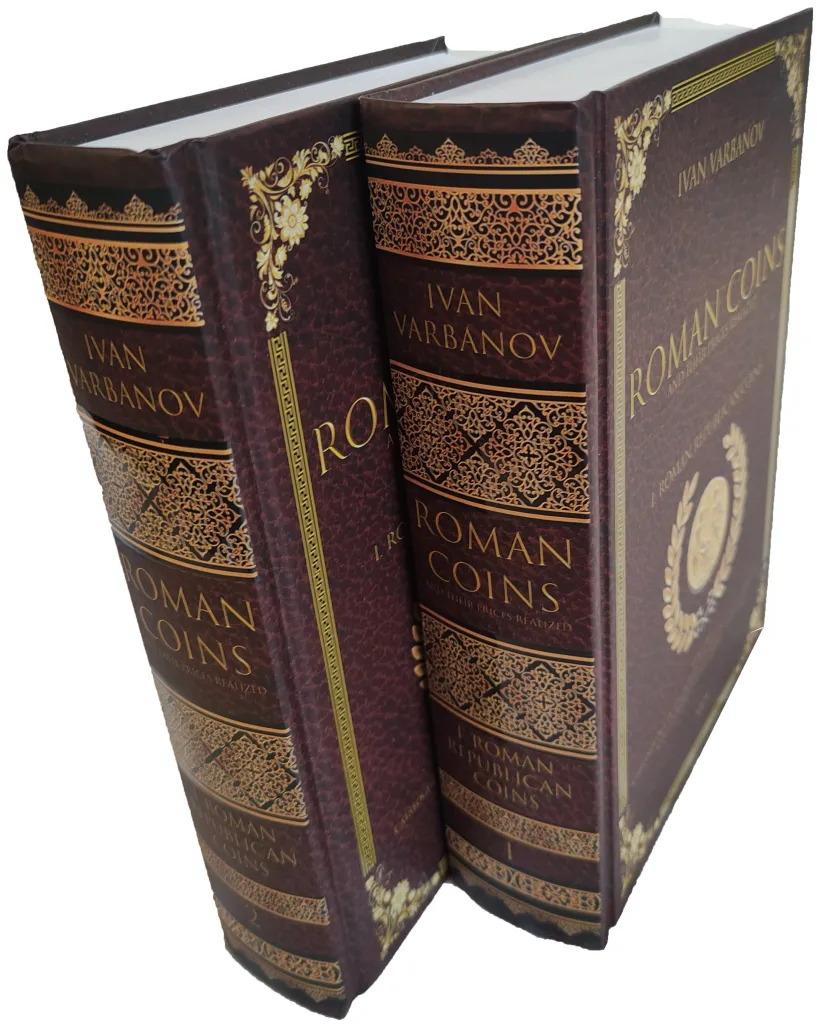
Edition in two volumes
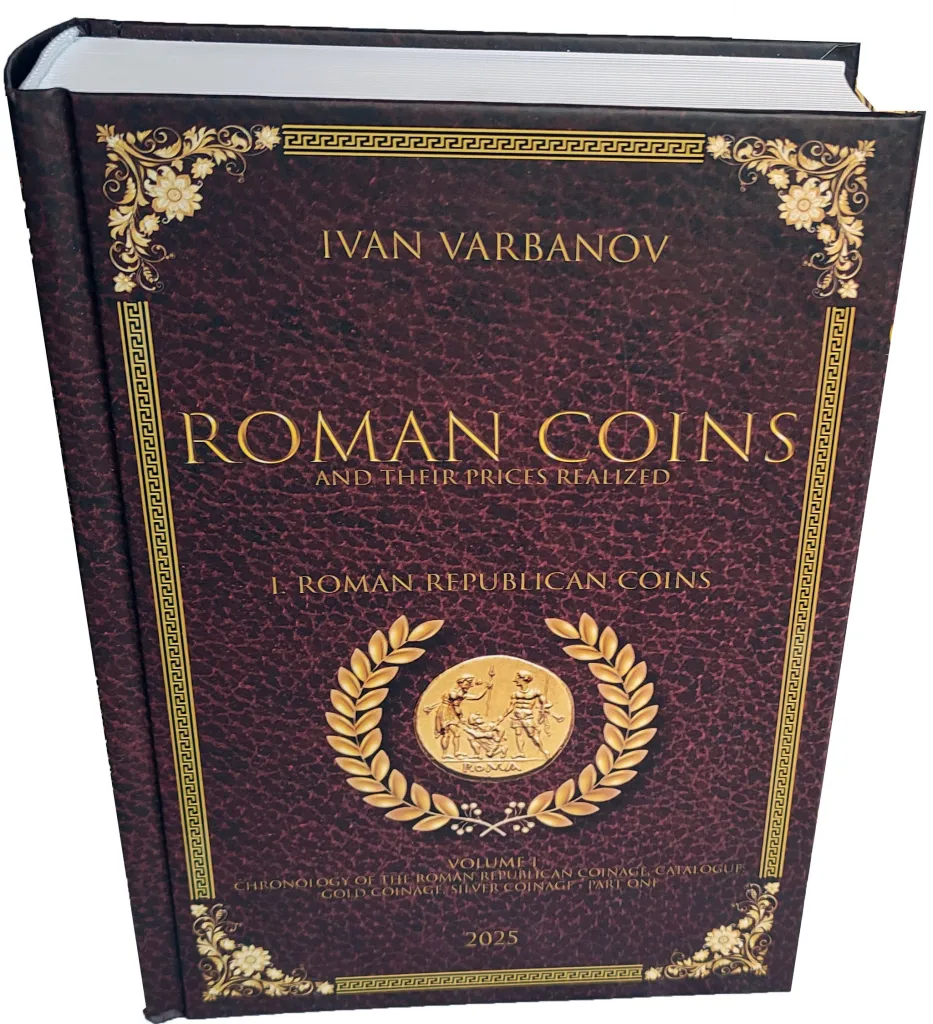
Vol. 1 Chronology of the Roman Republican Coinage, Catalogue: Gold coinage, Silver coinage – Part One – Colour 4+4 and 1+1, in English, 1st Edition, Bourgas 2025, Hardbound , 808 pages
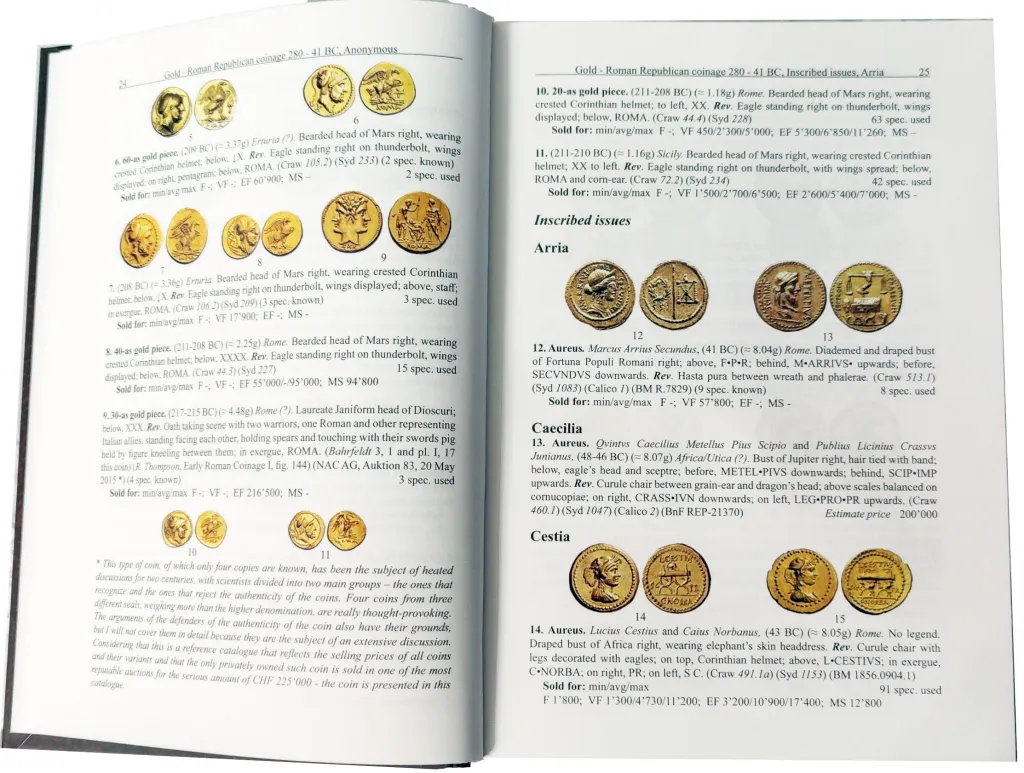
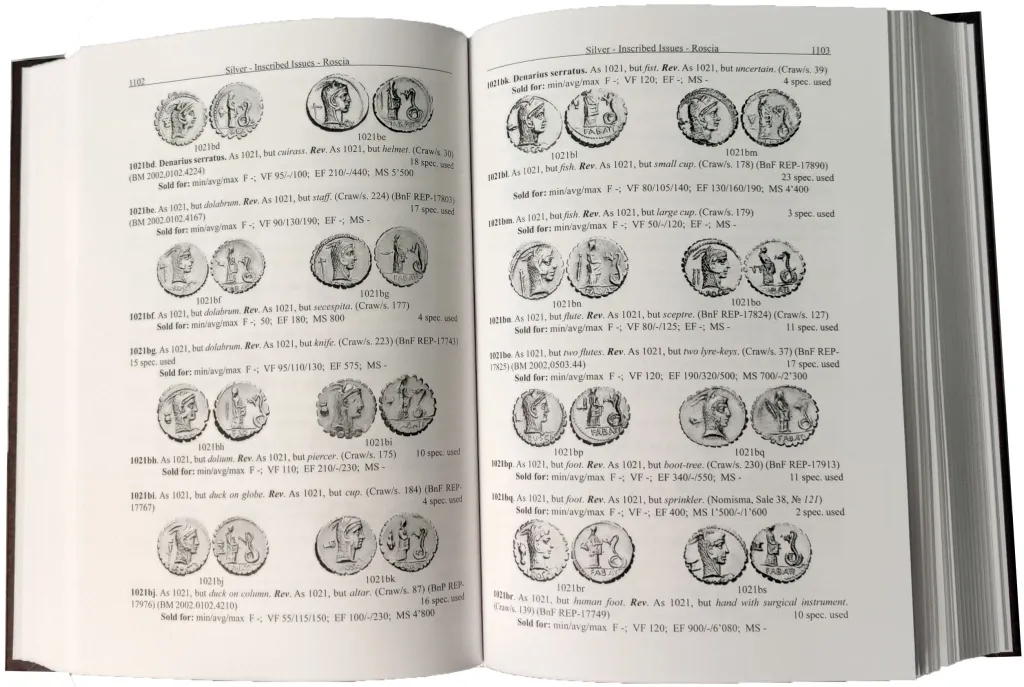
Pages from vol. 1
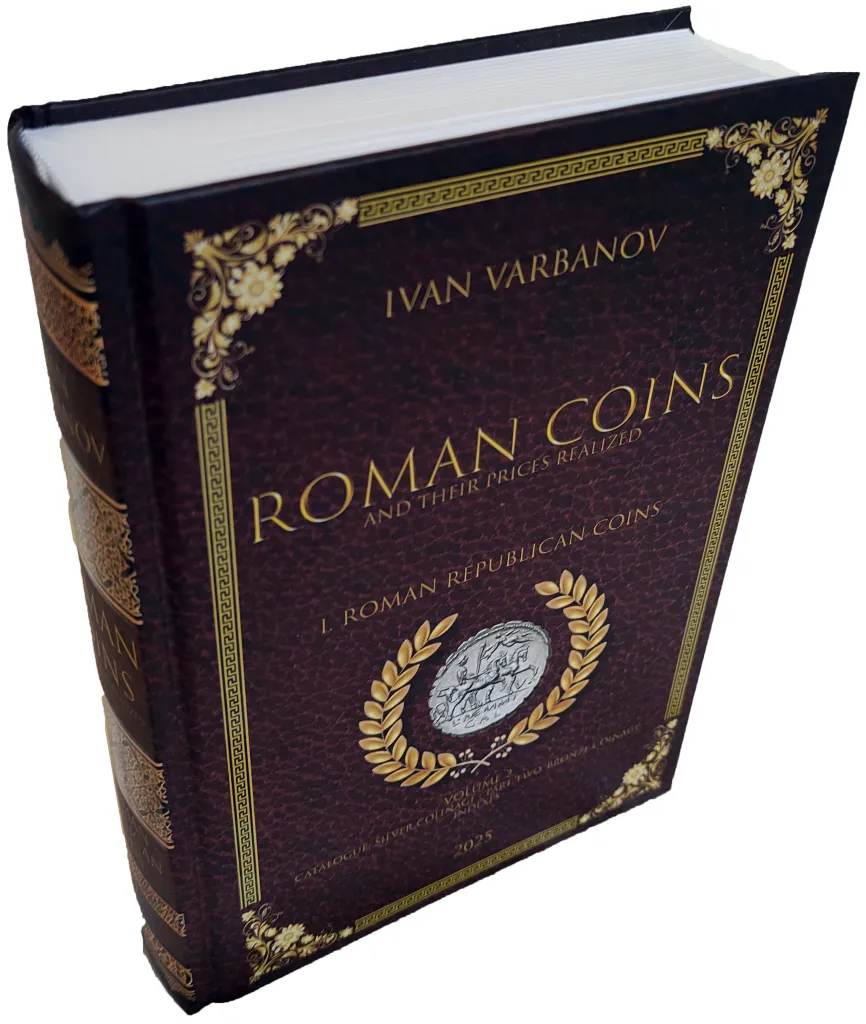
Vol. 2 Catalogue: Silver coinage – Part Two, Bronze coinage, Indexes – Colour 4+4 and 1+1, in English, 1st Edition, Bourgas 2025, Hardbound , 756 pages
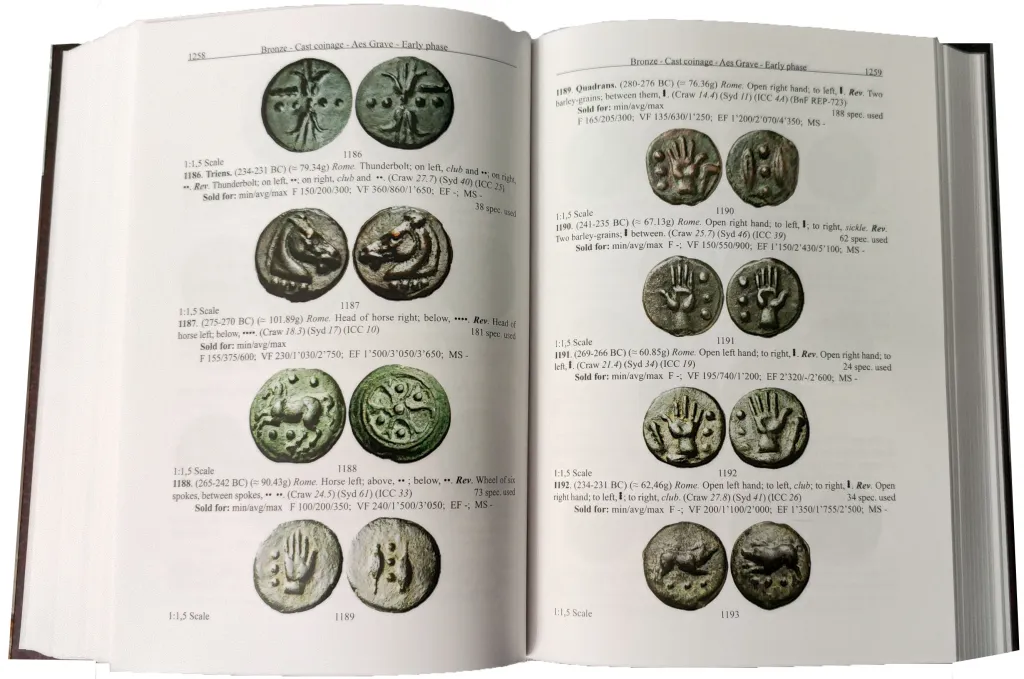
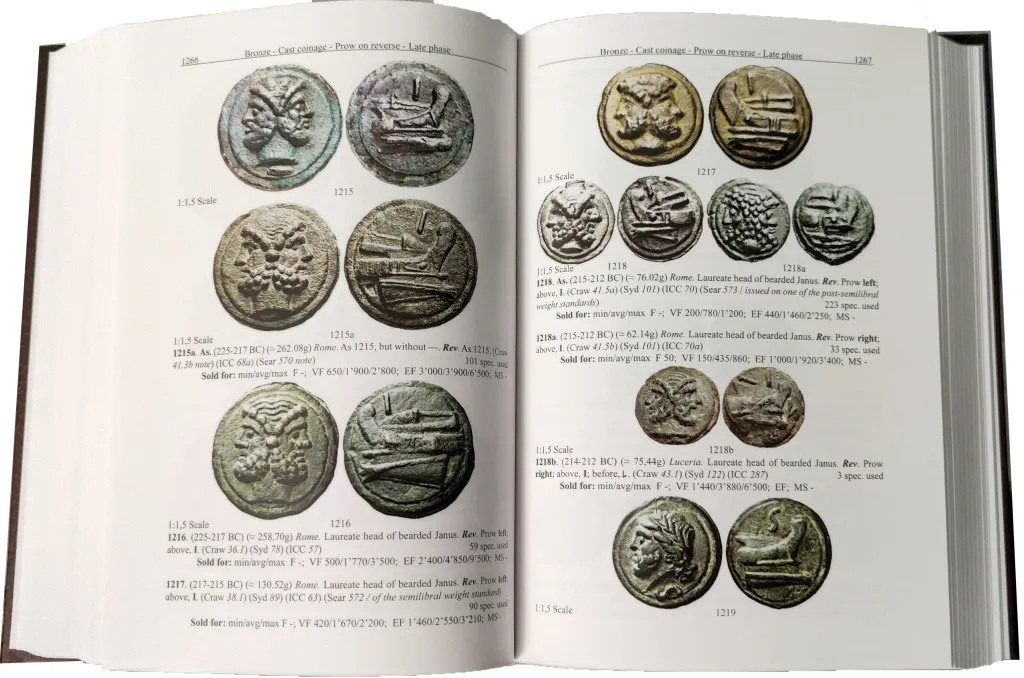
Pages from vol. 2
There is much magic, beauty, and challenge in numismatics, but the Roman coinage remains my one and only undisputed favorite. For more than 50 years, I have been collecting valuable information and I can confidently say that I have gathered the largest database of Roman coins, with facts about millions of pieces, currently available in private collections or expositions and archives of museums, with essential details on tens of thousands of auctions, eBay sales, and many other sources. I was fortunate to have collected this database during a time when, thanks to the rapidly developing metal detecting methods and technologies, many coins and troves were found around the world, as if trying to fill the gaps in the great puzzle of Roman Republican, Imperatorial, and Imperial coinage, thus providing a more complete picture of Roman coins and mint craft. To begin with, I published a few books on Greek Imperial and Roman Provincial Coinage, such as the three volumes of “Greek Imperial Coinage”, covering the provincial coinage at the mints on the Balkan Peninsula, as well as the two volumes of “The Coinage of Philippopolis”, covering the complete mintcraft in this ancient city. However, the main part of my database consists of coins issued at the central Roman mints. As the process of identification and classification recently became almost unmanageable due to the vast number of Roman coins discovered so far, I decided to publish the already available information in catalogs, initially focusing on the Roman Republican coinage.
This work aims to examine the Roman Republican coinage, covering the period from the irregularly shaped pieces of bronze known as Aes Rude (a.k.a. Aes Infectum or Imperfectum) to the period 8th – 3rd century BC and the beginning of Roman Imperatorial coinage (it will be considered in a separate volume), roughly around 49 BC. The purpose of this catalogue does not lie in providing a complete analysis of all aspects of the Republican coinage. In his work “Roman Republican coinage”, Michael H. Crawford dwells in detail on this topic and needs not be repeated. The current book simply aims to summarize the data already presented by the prominent scholars М. Crawford, А. Banti, L. Simonetti, E. Sydenham, E. Babelon, and all those who have contributed to the study and systematization of the Roman Republican coinage. The book also supplements the existing research by presenting many new coins that lack any previous description, together with their unpublished variants. It also covers a good number of hitherto unknown inscriptions, control marks, symbols, letters, or digits discovered after the publication of the fundamental works by the authors mentioned above. Apart from the main coin types, the classification presented herein describes all available varieties, including those absent in Crawford’s research, each marked with a separate number. All hybrid Republican coins for which I have found sufficient information are analyzed as well. A complete description of the coins issued by the mints during The Social War – the so-called denarii of the Marsic Confederation – is also added in this catalog.
A fundamental principle I try to follow in my work is to compose each book in a manner that I would personally expect to see for any such data arranged in a catalog. My presentation also follows the requirements and recommendations gathered through discussions with colleagues and collectors from all over the world. Hence, the key principle of this catalog is to facilitate quick identification of any already acquired coins or, alternatively, provide complete data on items one might wish to acquire. Therefore, all the presented coins are arranged based on the metal they are made of, i.e., in the following sequence: gold, silver, bronze.
Coins made of the same metal are further classified by their years of issue, as well as by their denominations. The design of a coin type is displayed in a photo adjacent to its description. Photos are provided on a 1:1 scale, apart from a few exceptions, where the scale is stated at the base. The year of issue is followed by the average value based on the weight of all coins of a specific variety. Since weight may vary within a wider range for some of the bronze items presented, the minimum, average, and maximum weight of the specimen is also provided. After a detailed description of the obverse and reverse for a given coin, all references for the same are duly listed, followed by the number of specimens used. Below each description, you will also find information about the specific prices at which the coin was sold, depending on its quality. Different prices are given for the different quality types: F (fine), VF (very fine), EF (extra fine), and MS (mint state). Furthermore, each quality type is featured with the minimum, average, and maximum price (min/avg/max) at which the coin was previously sold. All prices are in euros or have been converted to euros based on the exchange rate on the date the coin was sold, if it was originally sold in another currency.
A detailed Appendix is enclosed at the end of this catalog, specifying all inscriptions, control marks, digits, or symbols visible on any Republican coins. After each of these marks, you will find listed the pages where the same symbol appears. For faster and easier identification, the Crawford numbering is included in the beginning of the Appendix, along with the corresponding numbering as per this catalog.